
When the 1876 Centennial Exposition was built on the fairgrounds of Philadelphia’s Fairmount Park, what emerged from this first official world’s fair in the United States were new ideas in culture and innovation. Among the concepts and products we recognize today that debuted were Alexander Graham Bell’s telephone, Charles Hires’ root beer, and the Declaration of Rights of the Women of the United States, which was brought via a protest by the National Woman Suffrage Association.
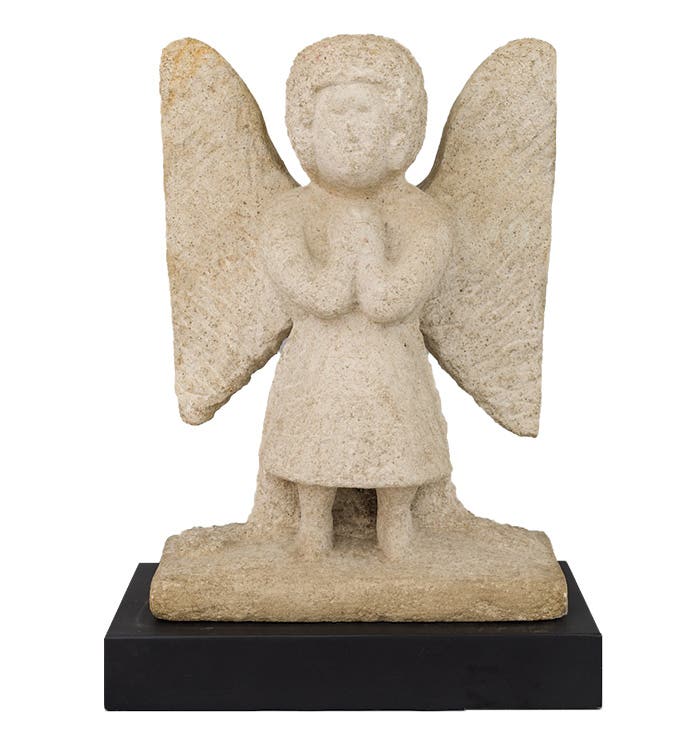
American Folk Art Museum, New York, Gift of Dorothea and Leo Rabkin.
Another concept that emerged from this momentous event was a sense of patriotism communicated through art and design. From May 10 through November 10 that year, the event coincided with the centennial of the Declaration of Independence, which was also signed in Philadelphia. Spurring from the Exposition was a fervor for America’s early years, which gave birth to the Colonial Revival aesthetic movement, also known as Americana. This genre often presented idealized visions of America’s past, one of a country that built an empire from the sweat of the hard work of the Founding Fathers and Pilgrims. In a country rapidly changing through technology, waves of immigration, a civil war, and economic depression, a simpler, albeit idyllic, vision of American history and heritage emerged.
Then came the arrival of folk art in the 1920s, a catch-all term for art made by people without formal artistic training. The rise of this art genre coincided with a period of isolation for America following the end of World War I, a time when there was greater interest in homegrown art than in work from overseas. Although folk art can be of any subject, many pieces depict images of American identity or history.
As another anniversary of the country’s founding, the Semiquincentennial, takes place this year, the American Folk Art Museum is revisiting the artistic concept of “Americanness” with the exhibition Folk Nation: Crafting Patriotism in the United States. Curated by Deborah Davenport and Stewart Stender, Deputy Director & Chief Curatorial and Program Officer, Emelie Gevalt, and Warren Family Assistant Curator Caroline Culp, the exhibition opened on April 10 and will close on September 13. It is planned to reopen in October.
On display in Folk Nation are “folk” items made for varying purposes (art, manufacturing, decorative, etc.), dating from the 1700s to the present, that were made within the United States. The show is curated to reflect a multifaceted view of the American experience, while illustrating how the visual concept of patriotism was crafted and defined in the past. Multiple themes shape the show, particularly those that are based on the concepts of American identity: family and belonging, memory, and belief, and its selection of artists are people from a wider range of backgrounds than the typical white, academically trained men that define the fine art canon.
“This is a chance to look at how Americans have defined themselves through the objects they’ve lived with, crafted, inherited, or collected,” explains Emelie Gevalt. “The project is framed to show that folk art is not just a joyful medium (although it certainly can be); it can also serve as a mirror and a tool in a number of ways, reflecting moments of darkness alongside those of pride and optimism.”
Such can be seen in an 1829 jacquard double-cloth coverlet that illustrates what Gevalt refers to as a “literal sense of patriotism,” featuring national symbols, a July 4th date, and the phrase “Agriculture and manufactures are the foundation of our independence” on the design.
A different perspective on American manufacturing is communicated with the painting Situation of America, 1848, by an unknown artist. “While it initially appears to reflect national optimism, a closer inspection reveals clouds of steam darkening the scene, billowing from a freight train and a paddle wheeler, foreshadowing the environmental consequences of industry,” explains Gevalt. “A decorative border of cotton blossoms provides a likely unintentional but now highly visible reference to the labor of enslaved people that fueled American affluence.”
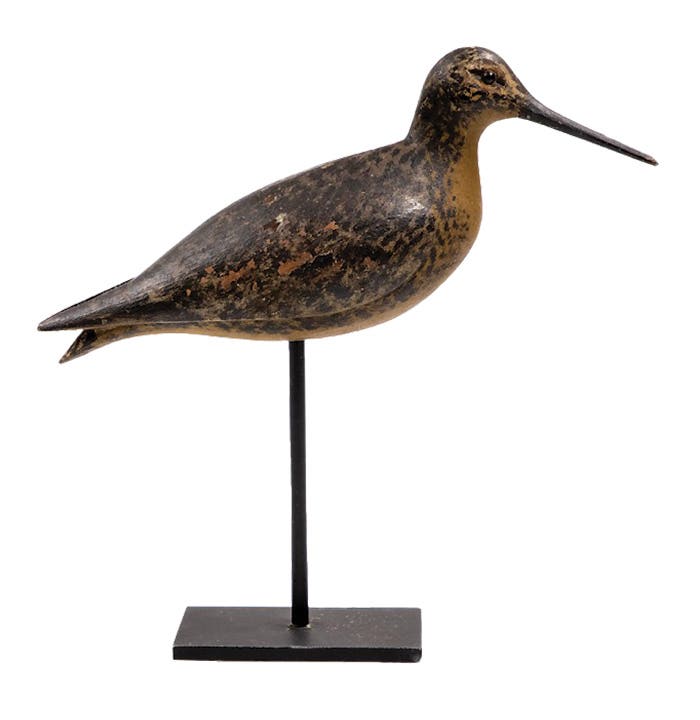
Artistic histories that have been forgotten also hold a presence in the show, particularly those that reveal “omissions in our understanding of iconic artworks or forms.” For example, Folk Nation explains that wildfowl decoys, now recognized as 19th- and early 20th-century Americana, originated in Native American traditions. “United States culture has often leaned on Native American histories as a distinctive aspect of the American story,” tells Gevalt. “In this case, the Indigenous origins of the decoy have been swept up in the celebration of later adaptations of the format.”
An exhibition exploring America’s 250th anniversary won’t be a unique sight for museumgoers this year. But a show that presents the USA as a nation of multiple selfhoods, where the positive and negative perspectives of patriotism have equal holdings in art, is. “By selecting objects that represent various identities and experiences, we ensure the exhibition tells a more inclusive and accurate American story,” Gevalt says.
Not only is American patriotism a red, white, and blue flag, but also a coverlet, a painting of a steamboat, and a wildfowl decoy. More information about Folk Nation: Crafting Patriotism in the United States is at folkartmuseum.org.
You may also like: