
Granted a Second Life: Upcycling Antiques and Vintage Pieces
Earth Day may put a spotlight on sustainability, but upcycling is a mindset that carries through the entire year.
There’s a difference between reusing and reimagining. While Earth Day draws attention to sustainability, upcycling is a practice that matters year-round.
Upcycling goes beyond recycling. It transforms overlooked objects into something with renewed purpose, whether functional or decorative. This is not about erasing history. It is about extending it.
That mindset is reshaping how antiques and vintage objects are viewed and used. Antiques were built to last. Many were made with a level of craftsmanship that is difficult to find today. As interest in sustainability grows, people are taking a second look at pieces that they may have once passed over.
Why Upcycling Is Having a Moment
For many people, traditional antiques present a problem.
They are often large and heavy. They were designed for homes with formal rooms and more space than many people have today. What once signaled quality and permanence can now feel out of scale in smaller, more streamlined living environments.
That does not mean people have lost interest in older things. It means they are approaching them differently.
Younger buyers in particular are drawn to pieces that feel personal, flexible, and environmentally responsible. Studies show that many millennials actively prefer sustainable products, with many willing to pay more for them. At the same time, interest in eco-friendly furniture and design continues to grow, driven by a desire to reduce waste and avoid mass-produced goods.
Upcycling has emerged as a practical solution.
Instead of rejecting older pieces outright, people are reshaping them to fit their lives. A heavy dresser becomes something lighter in both look and function. A traditional piece is edited down, repainted, or repurposed to suit a more modern space.
There is also a larger reality at play. Furniture is one of the biggest contributors to household waste, with millions of tons discarded each year and only a small percentage reused or recycled. Upcycling offers a way to slow that cycle, turning what might be discarded into something useful again.
I took a look at the kinds of antiques and vintage pieces people are actually choosing to repurpose right now. Some make perfect sense. Others may feel a little familiar.
Here are some ideas that keep popping up.
Furniture with a Second Function
One of the most interesting shifts in how people approach older furniture is this: they are no longer asking what it is, but what it could be.
That change in perspective is driving some of the most creative uses of vintage and antique pieces today.
Take the humble dresser.
Once a bedroom staple, often heavy and oversized by today’s standards, it is now one of the most commonly reimagined pieces. Instead of trying to fit it into a modern bedroom, people are giving it a completely different role. Dressers are being converted into bathroom vanities, with drawers modified to accommodate plumbing and tops replaced with stone or vessel sinks.
In kitchens and living spaces, similar pieces are finding new purpose as islands, media consoles, or storage units. The solid wood construction that once made them difficult to move is now what makes them desirable.
China cabinets and hutches, once tied to formal dining rooms, are being broken down or restyled into open shelving and bar storage. Desks and washstands are being adapted into vanities or compact workspaces. Even tables are shifting roles, moving from dining use to benches, islands, or hybrid storage pieces. What ties all of these changes together is not just creativity. It is practicality.
Many homes today do not have formal dining rooms. Bedrooms are smaller. Open floor plans demand flexibility. Furniture that serves a single, fixed purpose no longer fits as easily into daily life. Multifunctional pieces are increasingly favored, especially by younger homeowners trying to make the most of limited space.
Upcycling answers that need.
Instead of forcing a piece to remain what it was, people are adapting it to what they need now. Sometimes the change is dramatic, like cutting into a dresser to create a vanity. Other times, it is subtle, such as removing doors, updating hardware, or reworking the finish to lighten a piece's visual weight.
Not every update is subtle. Others go further, with dressers fully reimagined as open storage, replacing drawers with baskets to create a more flexible and accessible system.
In both cases, the goal is the same. Keep what works. Change what does not.
Pieces People Are Reimagining Right Now
Certain antiques keep showing up in upcycling projects. Not because they lack value, but because they are widely available, well-made, and adaptable to modern needs.
The dresser is just the beginning.
Even something as simple as a set of mismatched chairs can take on a completely new life. By combining chair backs and adding a single upholstered seat, what was once a collection of separate pieces becomes a unified bench. The individuality of each chair remains visible, but the function changes entirely. It is a small shift in thinking that turns overlooked furniture into something both practical and visually striking.
Some of the most successful transformations rely on restraint. A vintage card catalog, for example, does not need to be taken apart to feel relevant. By simply elevating it on clean, modern legs, the piece shifts from something heavy and utilitarian to something streamlined and architectural. The original function remains visible, but the scale and presence change completely, making it well-suited for today’s more minimal interiors.
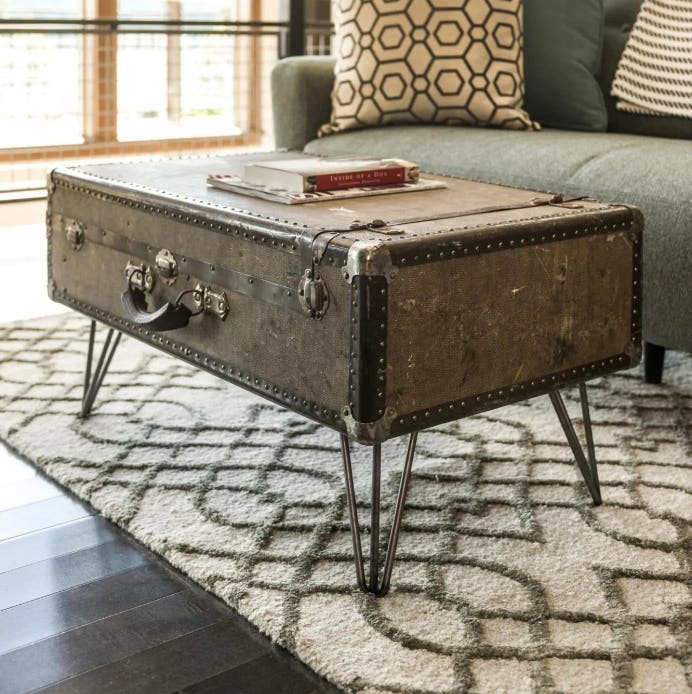
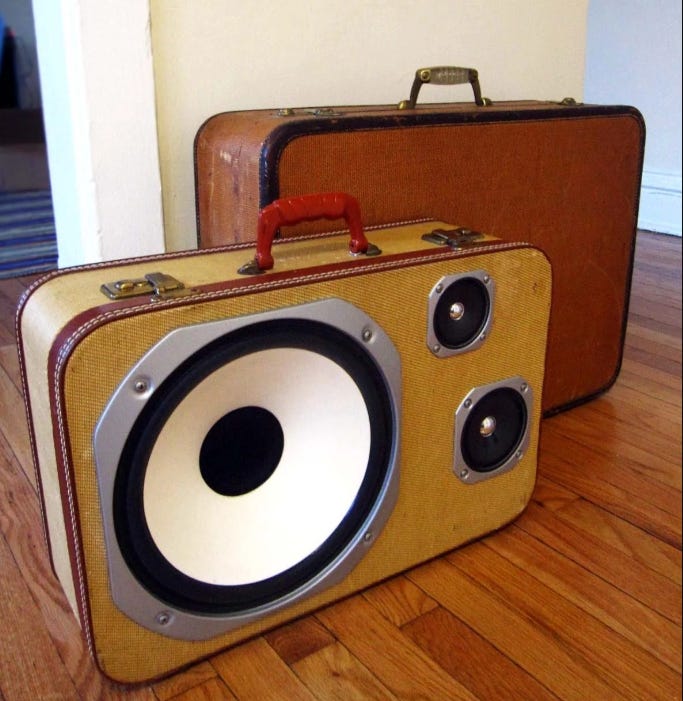
Vintage suitcases are also being reimagined in ways that feel distinctly modern. Instead of being stored away, they are repurposed as coffee tables or speaker cases, with updated audio components housed inside their original shells. In some cases, simple additions like legs or a base frame visually lifts them, turning what was once travel gear into functional furniture. The worn exteriors and aged hardware remain visible, adding texture and character while allowing the piece to fit comfortably into contemporary spaces.
Sometimes, Less Change Can Create the Biggest Shift
Some of the most effective upcycling does not involve major reconstruction. Instead, it focuses on small, deliberate changes that alter how a piece feels in a space.
A traditional buffet or sideboard can be transformed simply by lifting it. Replacing a heavy base with slim, modern legs changes the entire visual weight of the piece. What once felt grounded and formal becomes something that reads as clean and architectural.
Trunks offer another easy shift. Instead of being tucked away or used strictly for storage, they are being reintroduced as low-profile coffee tables. With little more than a cleaned surface and subtle updates, they bring texture into a room without adding bulk.
Doors are also being reconsidered. A salvaged door, cut down and placed on a simple frame, becomes a bench that feels both minimal and grounded. The original panels remain visible, but the function is completely different and far more suited to modern entryways.
Even sewing machine bases are finding new life. By removing the original top and replacing it with a streamlined surface, they become desks or small tables that retain their character without overwhelming the room.
The goal is not to disguise the original object. It is to shift how it lives in a space. A slight lift. A cleaner line. A simplified surface. In many cases, the difference between outdated and desirable comes down to a single decision. Not whether to keep a piece, but how to alter it to fit your space.
The Paint Debate
There is one approach to upcycling that tends to divide opinion more than any other.
Paint is where opinions tend to split. For some, painting an antique feels like a loss. Original finishes, natural wood grain, and patina are part of what give a piece its character. Once covered, they are difficult, if not impossible, to fully recover. For others, paint is what makes a piece usable again.
A dark, heavily varnished finish that once suited a formal dining room can feel overwhelming in a lighter, more modern space. A simple coat of paint can shift that perception immediately, softening the piece's heavy feel and allowing it to fit into a new environment. In many cases, the choice comes down to condition and context.
Pieces with significant damage, heavy wear, or lower market value are often strong candidates for painting. Rather than being discarded, they are refreshed and returned to daily use. Even critics of painted furniture tend to agree that when a finish is already compromised, intervention makes sense.
There is also a practical argument that is difficult to ignore. Upcycling, including repainting, helps keep furniture out of landfills and extends the life of materials that were built to last. A well-executed update can make a piece functional again while preserving the craftsmanship beneath the surface.
That does not mean every piece should be painted. High-quality examples, rare forms, and pieces with significant historical or monetary value are more often better left as they are. In those cases, preservation still carries weight.
But for the many pieces that fall somewhere in between, paint has become a tool. Not to erase history, but to make it livable.
The most sustainable piece of furniture is often the one that already exists. It just needs to be seen differently. Upcycling makes that shift possible, turning what once felt outdated into something that fits the way people live today.
You may also like: