

Historic Astrolabe Sells for Record Price
A monumental example of the “supercomputer” of the past set a new record worthy of its royal history.
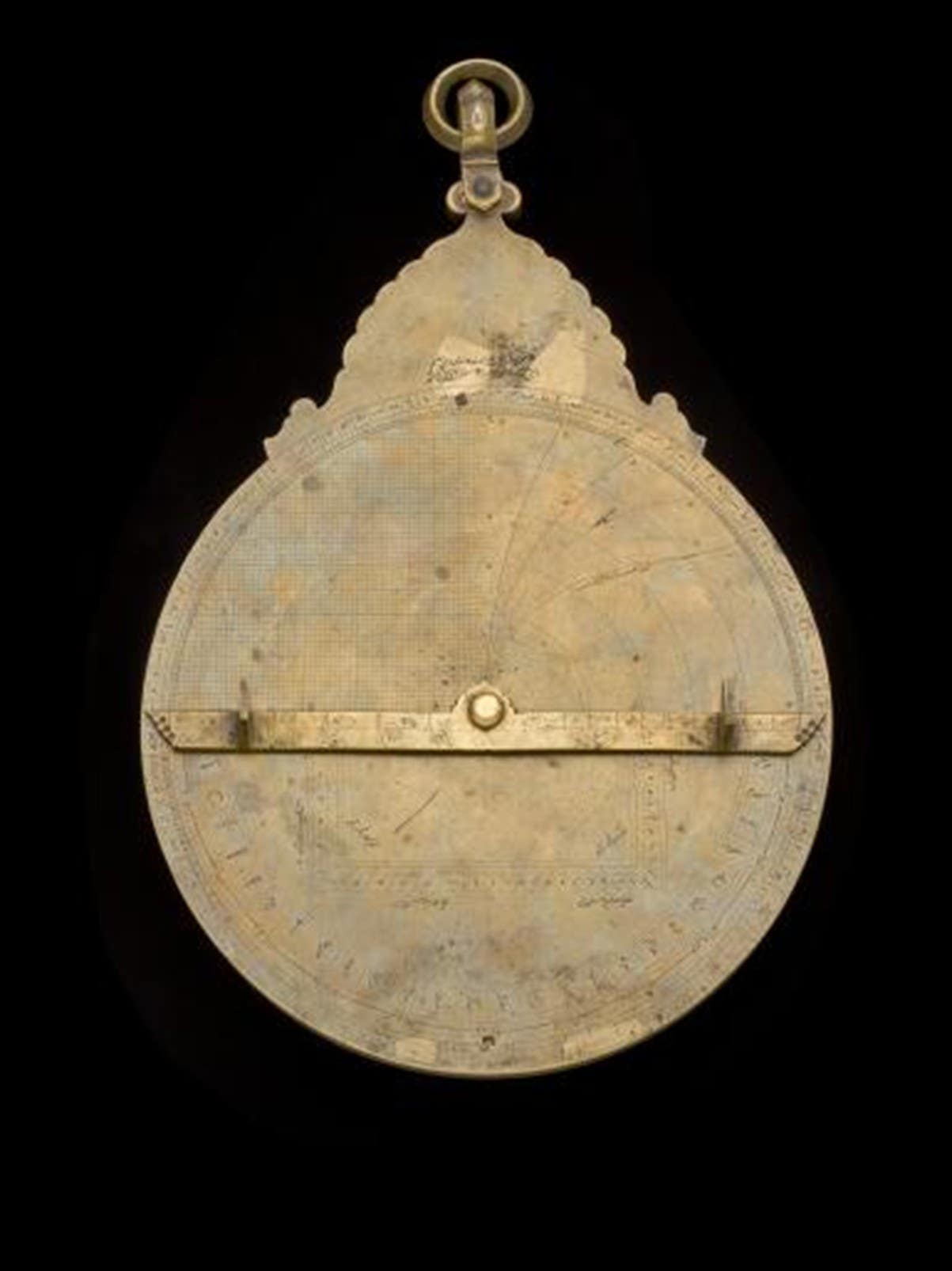
Astrolabes are considered the supercomputers or smartphones of antiquity. Consisting essentially of a marked disc and a movable pointer, they were used to perform complex calculations to determine latitude, time, elevation, the positions of stars, and more. This made them important tools for astronomy, navigation, and surveying. Many antique astrolabes were as beautiful as they were functional. A remarkable brass astrolabe from the Mughal empire, a stunning example of the craftsmanship and scientific achievements of the time, recently sold for a record price of over £2 million ($2.75 million) at a Sotheby’s auction in London.
The astrolabe sold in the Arts of the Islamic World & India auction on April 29, following an exhibit at Sotheby’s London galleries, its first-ever public appearance. It is an exceptionally large piece, measuring nearly a foot in diameter (29.5 cm, or about 11.6 in) and weighing 8.2 kg (18 pounds). It was commissioned by Mughal nobleman Aqa Afzal and made by brothers Qa’im Muhammad and Muhammad Muqim in May 1612. The brothers were accomplished makers of scientific instruments, but this is only one of two known astrolabes they worked on together.
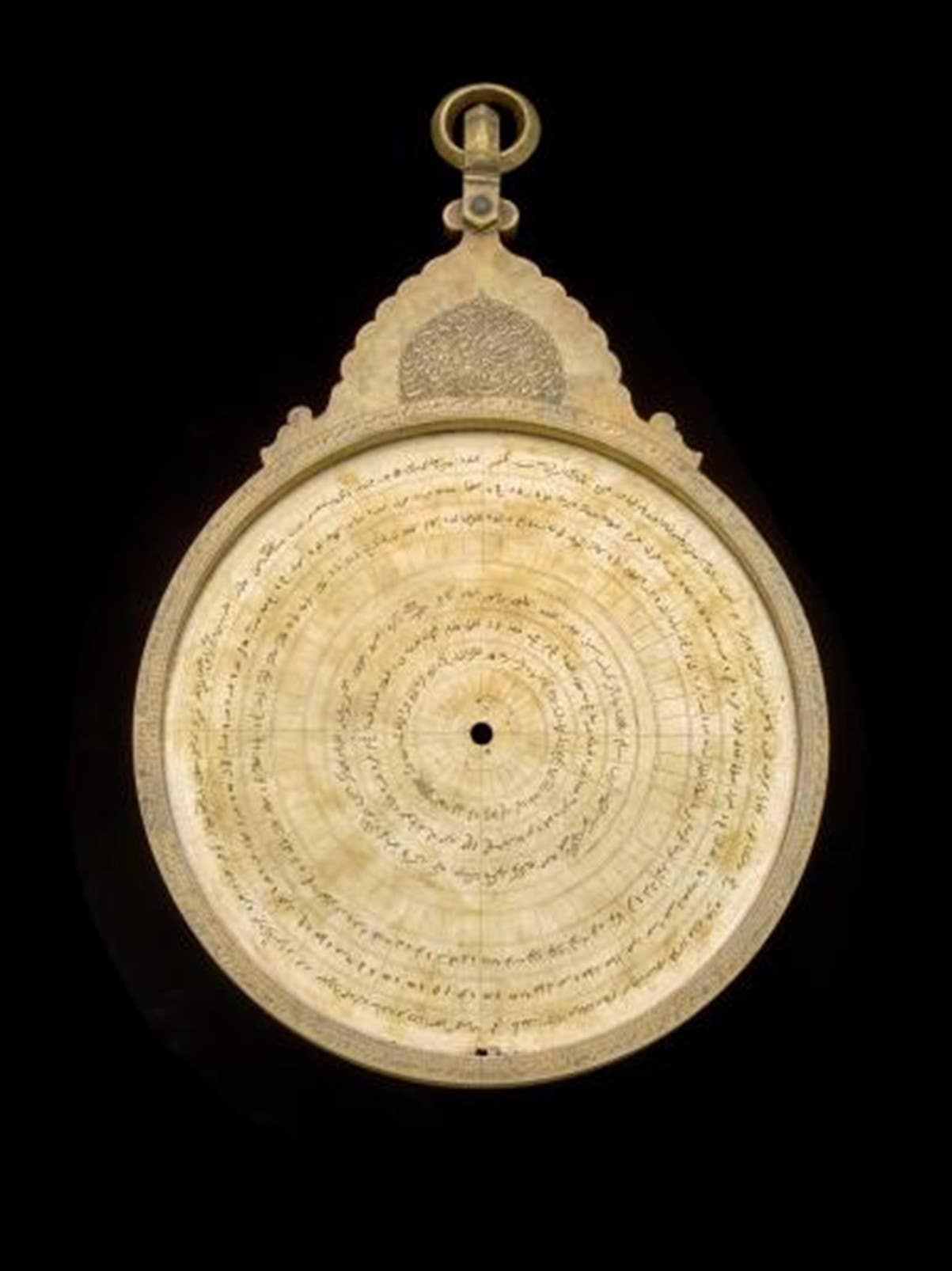
The skillful brass casting and engraving make the astrolabe a work of art as well as a scientific instrument. What appears to be a layer of graceful arabesques is the rete, a rotating framework with pointers that point to the brightest stars. The kursi, the top crest, is inscribed in nasta'liq, a form of calligraphy used for Persian and Arabic writing, identifying the patron and makers and dating the astrolabe according to the Islamic calendar.
The inscription on the front proclaims it “a perfect astrolabe.” This is not just a reference to the exceptional craftsmanship; it means a complete astrolabe that accounts for all possible altitudes in the sky. The inscription on the reverse identifies the makers, who humbly call themselves “two of the weakest servants [of God],” despite their impressive lineage as “the two sons of Mulla ‘Isa, the son of Allahdad of Lahore, the astrolabe maker of [the Emperor] Humayun.” As the inscription says, making scientific instruments was a family business. It started with Shiekh Ilah-dad, royal astronomer to Humayun, the second Mughal Emperor. His son, ‘Isa, also made astronomical instruments. Qa’im Muhammad and Muhammad Muqim raised their respective sons in the same trade.
The family lived and worked in Lahore, one of the most important cities in the Mughal empire. Today, it is still one of the largest cities in Pakistan. Lahore was a center for art and science. Mughal rulers and nobility were great patrons of both, and the two were intertwined. Mughal architecture, like the famous Taj Mahal, demonstrated skill in engineering as well as an eye for aesthetics. Realistic botanical designs were a favorite for decorative arts, reflecting a fascination with the natural world. And, of course, scientific instruments could also be objects of great beauty.
You may also like: