

The Allure of Antique Cigar Box Art
Cigar label proofs reveal the artistry and innovation of vintage printing’s golden age.
I first encountered cigar label proofs as a teenager when, at an estate sale, I pulled a chest from beneath a staircase. The people running the sale had earmarked “that box of junk” for the garbage and were surprised I wanted to buy it. I bought it without inspecting the pile within—the first few told me that the trove was something special. My dad, who had a printing company in Manhattan, immediately recognized them as cigar label proofs and progressives—vital information that, before the computer age, would have taken days to discover at the library. There were 785 proofs and only a few progressives, which I still have. Since then, I have learned a great deal about cigar label proofs and progressives and have even added vintage cigars and cigar-related items to my ever-expanding collections.
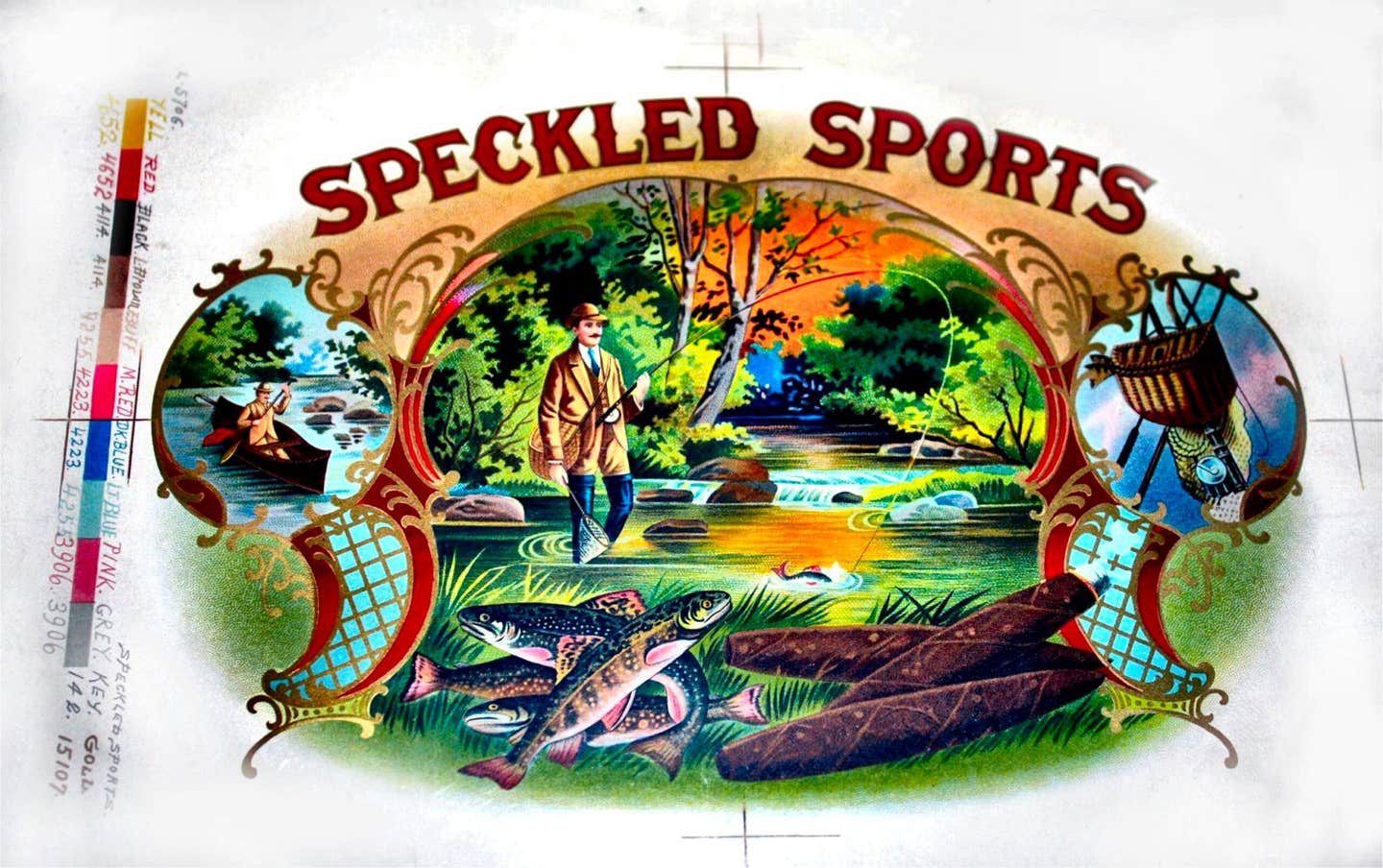
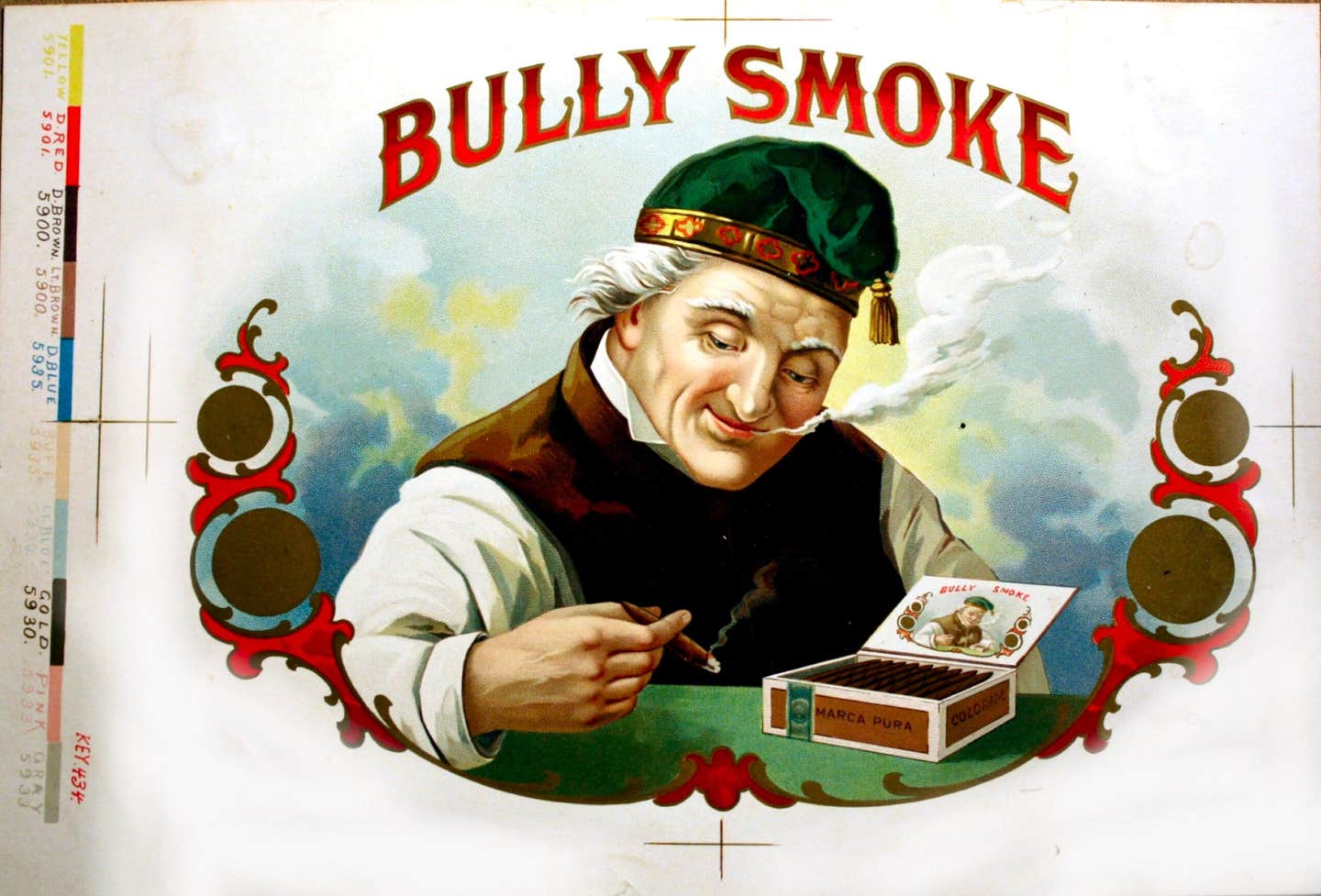
The cigar industry of the late 19th and early 20th centuries was a hub of artistic innovation and marketing ingenuity. By the close of the 19th century, it is estimated that there were over 50,000 cigar manufacturers in America. Lithographers competed fiercely for business from cigar manufacturers and produced an array of visually stunning labels to captivate cigar smokers. These labels were often created speculatively and distributed as samples to factories.
Antique cigar label proofs are among the most fascinating and elusive collectibles in the world of vintage advertising. They are celebrated for their breathtaking lithographic artistry and remarkable scarcity. These proofs, from the golden age of American printing, represent trial runs that lithographers produced before final printing.
Proofs were never intended for public distribution; they are trial impressions, printed in very small numbers, typically fewer than ten per design. Proofs allowed manufacturers to approve design, colors, details, or minor adjustments before proceeding with mass production.
Proofs may differ in color intensity, layout, or even the inclusion of the printer’s notations, giving collectors insight into the creative and technical process of chromolithography; few have survived, making them much rarer than completed labels. These trial pieces often showcase richer colors and bolder details than the production versions.
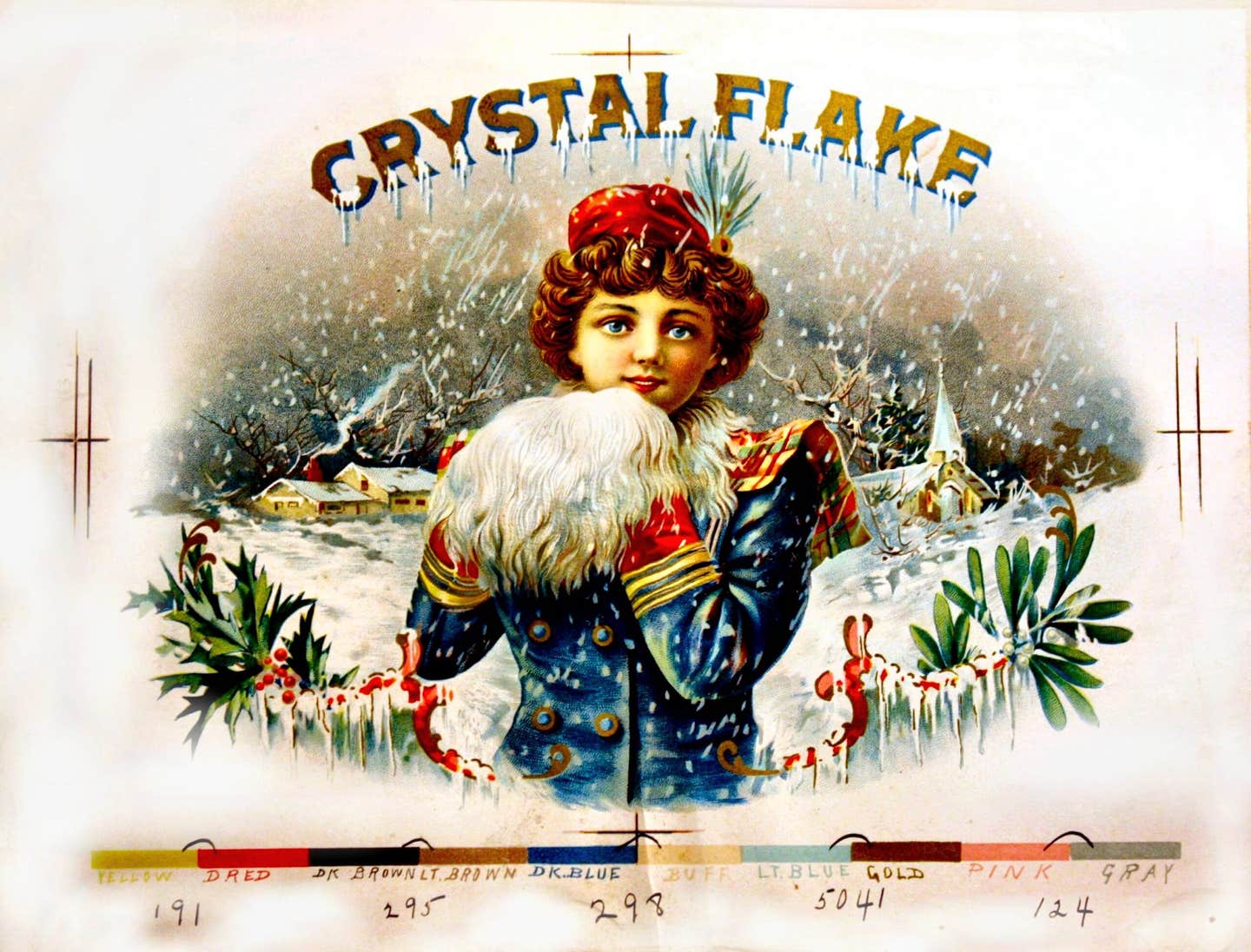
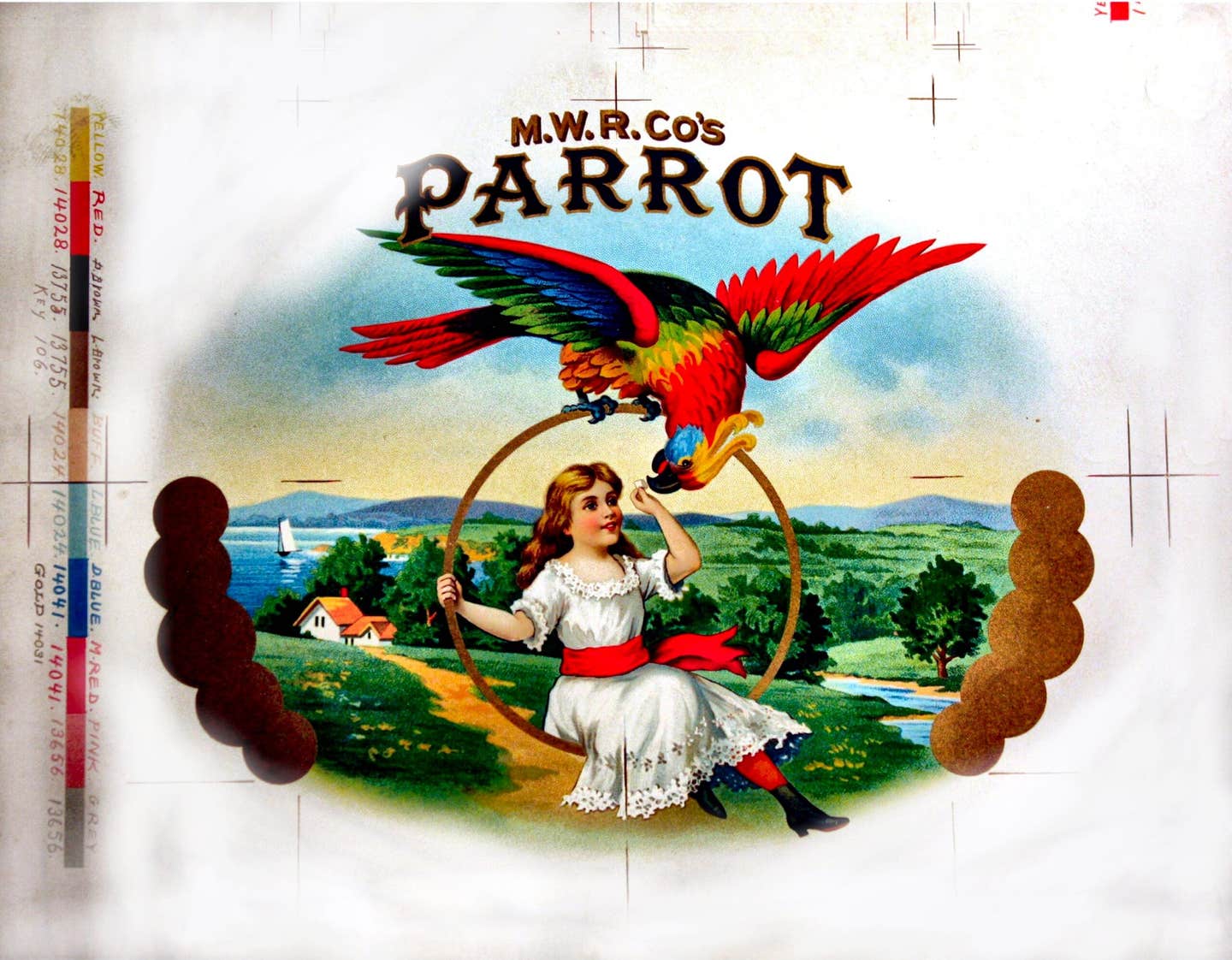
Each proof is unique, featuring distinctive registration (alignment) marks resembling plus signs along the borders. Many also display color bars, showcasing the gradual addition of hues. Some proof labels represent designs that never made it to full production, making them the sole surviving examples of certain images.
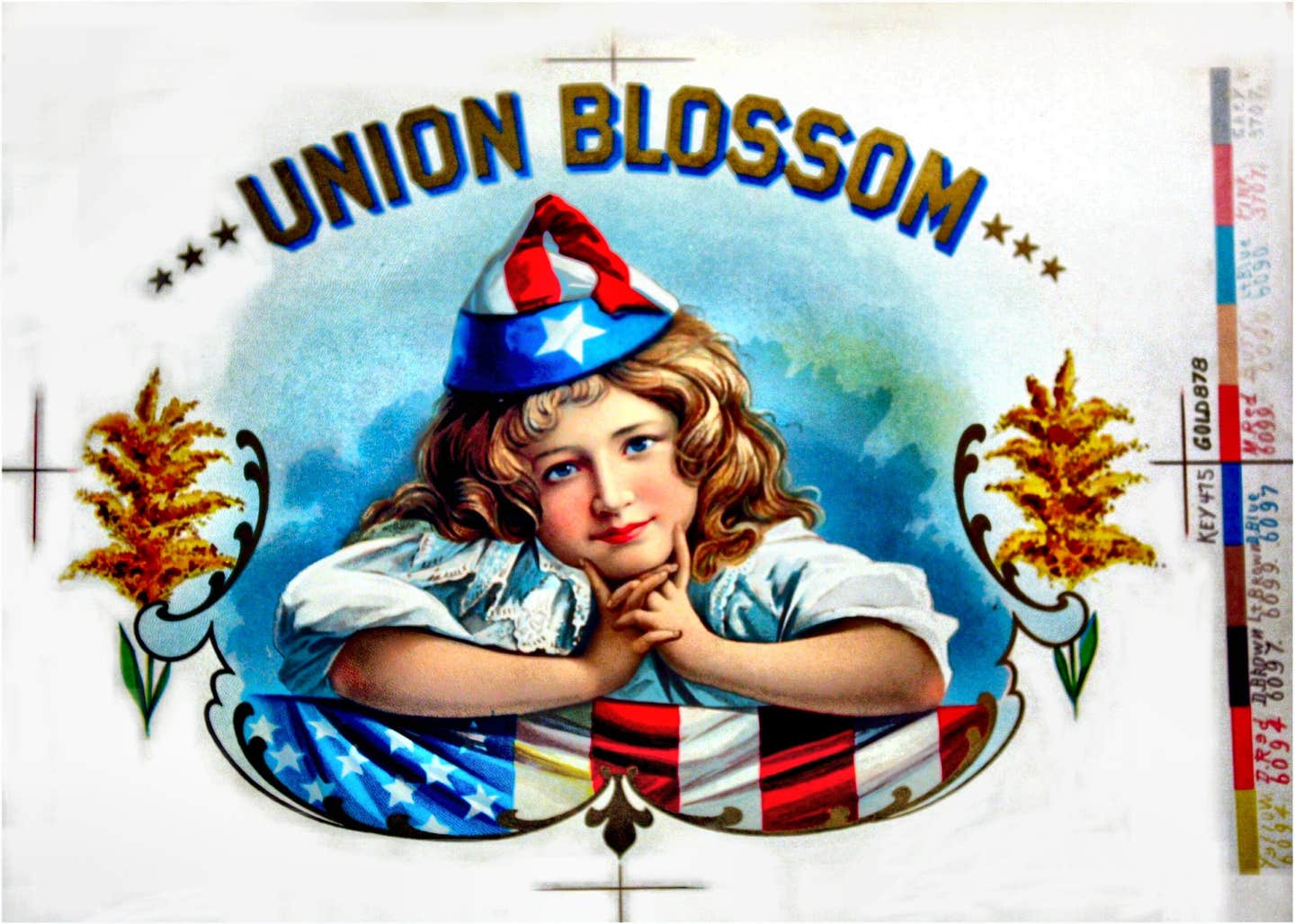
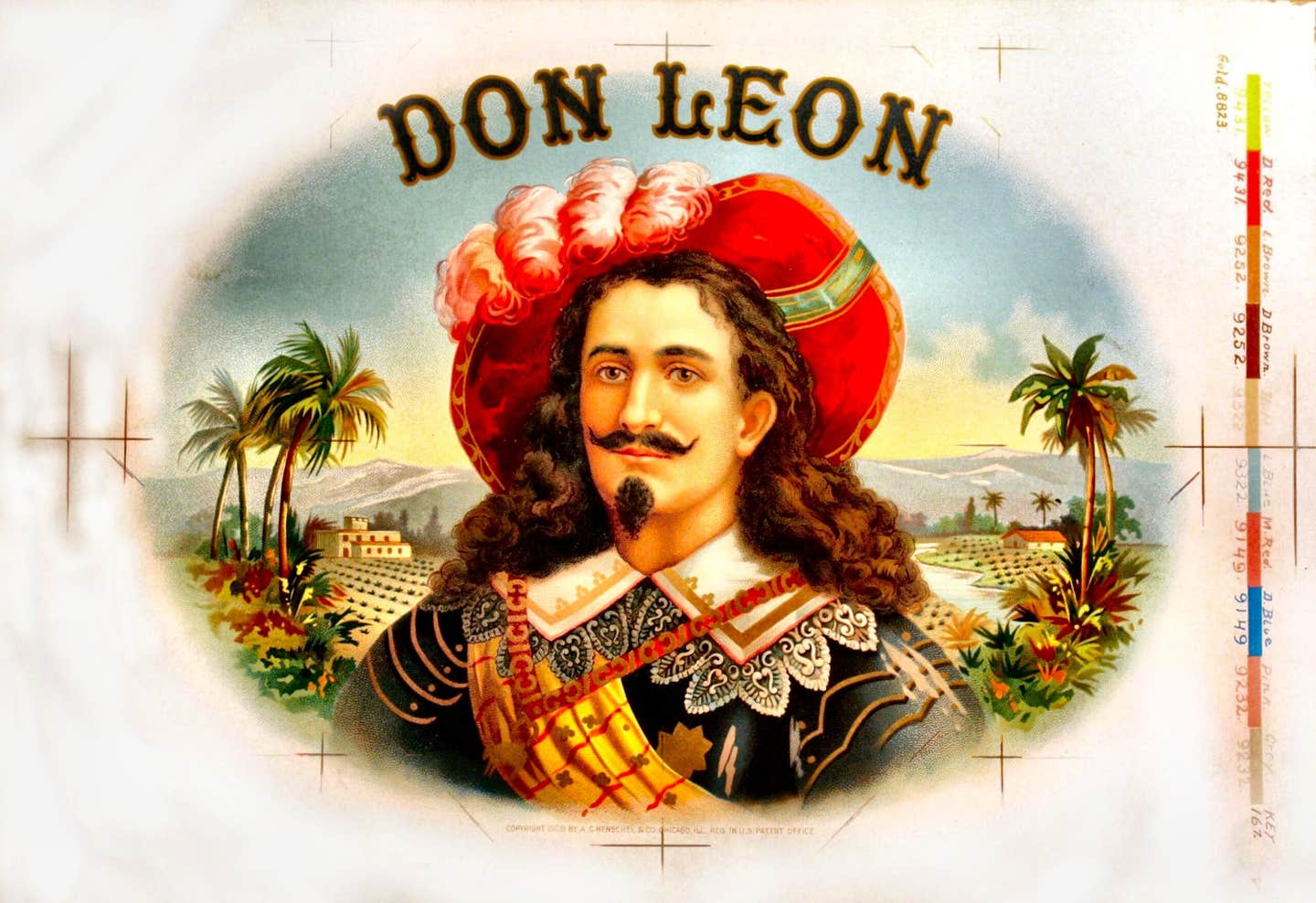
Many proofs showcase the height of late 19th- and early 20th-century chromolithography, a medium that allowed cigar labels to dazzle buyers with metallic inks, embossed textures, and vivid colors. The designs often feature neoclassical imagery, allegorical figures, sports imagery, historical subjects, and intricate ornamentation, reflecting the prestige cigar manufacturers wished to convey. Artists and lithographers such as George Schmidt & Co. 1874-1916, O.L. Schwencke 1870–1900, George Schlegel 1845–1935, Heippenheimer and Maur 1874–1885, American Lithographic Co., Louis Wagner 1895–1905(?), Heywood Strasser & Voigt, 1890–1919, and George Harris and Sons, 1847–1892, became renowned for their cigar label artistry.
The artistic merit of these labels cannot be overstated. Lithographers employed highly skilled, though often uncredited, artists who demonstrated remarkable creativity and imagination in their designs. The themes and imagery showcased on these labels continue to astonish viewers with their originality and craftsmanship, offering a window into the artistic sensibilities of a bygone era.
Chromolithography, an adaptation of stone lithography specifically for color printing, was the pinnacle of early printing techniques. The process imbues cigar labels with exquisite detail often overlooked by casual observers. These miniature masterpieces showcase a level of artistry and precision that elevates them from mere advertisements to genuine works of art, inviting closer inspection and appreciation of their intricate craftsmanship.
The stone lithographic process has to be appreciated to understand the labor-intensive process required to produce a single cigar label. I first learned about the process from my father. Briefly put, the stone lithographic process is a printing method where an image is drawn with a greasy substance onto a flat limestone surface; the stone is then chemically treated so that the greasy areas attract ink while the ungreased areas repel it, allowing prints to be made by pressing paper onto the inked stone.
In the stone lithographic process used for antique cigar labels, each color in the design required a separate stone and a separate run. Top-quality labels often utilize between 12 and 25 stones for a single print. Some of the most elaborate examples could use as many as 40 stones to achieve complex color combinations and effects. This highly specialized and labor-intensive process is what gave such striking detail and vibrancy to antique cigar labels. With so many different stones, the registration lines assured proper alignment.
Cigar label proofs are especially valued by collectors when they show progressive stages (such as black-only outlines, partial coloring, or fully finished states). A “progressive” print shows the step-by-step addition of each color used in the final multicolor label. It is, in essence, the evolution from a blank page to the final label. Only a few progressives were made for each label, making them extremely rare. The finest examples can command thousands of dollars at auction, especially for labels with patriotic, sports, exotic, recognizable figures, or classically inspired imagery.
Rarity, condition, subject matter, and manufacturer are all considerations when determining value. Most proofs were discarded, making survivors genuine rarities. Because of their limited print run, proofs are treasured above nearly all other cigar ephemera and command higher prices than standard labels. They are a popular cross-collectible appealing to collectors of Tobacciana, ephemera collectors, and graphic art enthusiasts.
Cigar bands, with more than 165,000 distinct varieties, were also produced as proofs in sales books, which are highly prized among vitolphilists—collectors of cigar bands.
Vitolphilia is a niche hobby more common in Europe than in the United States. These little beauties are prime examples of the creativity and talent of the artists and printers who helped make cigar smoking a billion-dollar industry.
The “golden age” of cigar smoking in the United States and Europe lasted from the 1880s through the 1910s. Cigars were seen as status symbols, and many men posed for studio photos holding or even smoking them.
It is estimated that, in 1900, four out of five men in the United States were cigar smokers. Nearly every city had a cigar factory, with as many as 42,000 cigar factories in the United States. Cigar production hit a record high around 1920, when it is estimated that about 8 billion cigars were made annually until the onset of the Great Depression and the popularity of cigarettes. Cigar smoking is still extremely popular.
“Swiss Cuban Cigars,” an online cigar retailer based in Spain, provided the following information. “In 2024, the global cigar industry generated about $23.4 billion in revenue, with the United States accounting for over half of that total.”
In fact, cigar smokers in the United States accounted for a little more than 66% of cigar smokers worldwide.
Some cigar label proofs, for common varieties with very simple designs, can be found for less than $20.00. Many sell for under $100.00, while others sell for hundreds to thousands of dollars.
Auction prices for rare, late 19th-century examples can run $500 to $3,000, with only the most exceptional proofs selling for $2,000 to $3,000.
Do you have a question for Collector’s Gallery? Send your question and photos via e-mail to ATNews@aimmedia.com. Please include as much pertinent information about your item as possible, including size, condition, history, and anything else that might help identify and value it.
Our guest appraiser is Dr. Anthony Cavo, a certified appraiser of art and antiques and a contributing editor to Kovels Antique Trader. Cavo is also the author of Love Immortal: Antique Photographs and Stories of Dogs and Their People.
You may also like: