
More Than Decor: Cracker Barrel’s Curated Americana
Behind the butter churns and vintage signs is a serious antiques operation, complete with professional pickers, careful curation, and a vast Tennessee warehouse.
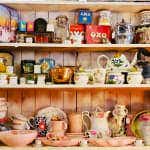
If you’ve ever eaten at a Cracker Barrel Old Country Store and found yourself staring at a wall full of vintage signs, butter churns, or a 1920s Coca-Cola tin, you probably found yourself wondering—are they replicas or are they real? Well, these remarkable slices of the past aren't props. They’re real antiques, and there’s a fascinating story behind how this classic Americana chain built its museum-like vibe.
Cracker Barrel’s signature look wasn't built on modern replicas. Instead, it came from actual antiques that have been carefully sourced, restored, and curated for decades. Cracker Barrel has a dedicated décor team/department responsible for sourcing, acquiring, cleaning, cataloging, and distributing antique and vintage artifacts for its restaurants nationwide. These are paid roles within the company, not side gigs or casual purchases.
The company's best-known "picker" was Larry Singleton, who spent nearly 40 years overseeing the sourcing of antiques for Cracker Barrel’s décor, building relationships with dealers, attending auctions and flea markets, and overseeing what went on the walls of each restaurant. After his retirement, the role continues under his longtime colleague Joe Stewart, who manages and supervises the décor team and warehouse operations.
Initially, Cracker Barrel’s founder recruited local antique dealers (Don and Kathleen Singleton) to decorate the first restaurant, and their son Larry grew that into a full-time decorating and procurement job. Over time, the company built an entire warehouse and staffing structure around antique sourcing and décor management.
Unlike individual collectors, Cracker Barrel often acquires antiques in bulk, sometimes buying dozens or even hundreds of similar items at once. This approach helped the company scale quickly as it expanded, but it also shaped the visual rhythm of its interiors, rows of similar butter molds, clusters of hand tools, or walls of signage arranged by color or theme. Over time, this bulk-buying strategy influenced trends in the antiques market itself, particularly for once-overlooked utilitarian objects that suddenly had a consistent commercial buyer.
The company operates a massive 26,000-square-foot décor warehouse in Lebanon, Tennessee, the same town where the very first restaurant opened in 1969. Inside that warehouse are more than 90,000 cataloged Americana pieces, ranging from vintage farm tools and old signage to antique print ads and farmhouse implements, toy collections, and oil lamps. Each item is cleaned, bar-coded, and stored until it’s needed in one of the chain’s roughly 660 stores nationwide.
While the restaurant's menus evolve and retail merchandise turns over seasonally, the antiques on the walls tend to remain remarkably static once installed. That’s intentional. Cracker Barrel treats its décor less like set dressing and more like a permanent installation, swapping pieces only when damage occurs or a store undergoes a major renovation. For regular customers, this creates a sense of familiarity.
However, one thing Cracker Barrel’s décor team is careful about is the memorabilia they avoid. Items tied to alcohol, tobacco advertising with explicit imagery, controversial political messaging, or anything that could be considered unsafe or offensive in a family setting are generally passed over. This internal filtering has quietly shaped the collection over decades, resulting in walls heavy on agricultural tools, domestic objects, transportation, and wholesome advertising, categories that also tend to be more durable, affordable, and regionally adaptable.
Cracker Barrel Begins
The antique decor tradition started with Cracker Barrel’s founder, Dan Evins, who opened the first store just off Interstate 40 in 1969 as a place for travelers to eat and browse like an old-fashioned general store. To decorate the first location, Evins tapped the Singletons, local antiques dealers, who filled the walls with authentic items evoking rural Southern life. Their work laid the foundation for the brand’s iconic look.
When Dan W. “Danny” Evins opened the first Cracker Barrel Old Country Store in Lebanon, Tennessee, in 1969, his goal was not to build a national chain. It was to recreate something personal and familiar, a gathering place much like the old country stores he remembered from his youth. These general stores were places where neighbors met, shared news, played checkers around barrels of crackers, and enjoyed simple country fare. Evins wanted to bring that feeling of Southern hospitality and friendly community to travelers on the interstate.
He chose the name "Cracker Barrel" because it evoked the image of people sitting around a barrel socializing. He designed the concept as a restaurant with a gift shop modeled after those rural stores.
Evins wasn't planning on national expansion. His initial idea was to create a comfortable, nostalgic stop for travelers and locals alike, modeled on the country stores of his upbringing, and to build on that success. The company was incorporated only a few months after opening and gradually added nearby locations. By 1977, there were about a dozen stores throughout the Southeast. Expansion beyond that region occurred naturally as the concept proved successful, rather than as part of a specific nationwide blueprint in 1969.
Decor as Brand Identity Matters
Cracker Barrel’s antique aesthetic isn’t just nostalgia; it has become a defining part of its brand identity. Recently, when the company attempted to modernize some restaurant interiors by reducing clutter, lightening spaces, and removing many of the traditional antiques, it sparked near national outrage. The vocal backlash from regulars who felt the brand's “soul” was being lost was immense. In response, Cracker Barrel officially shelved the redesign plans, reverted the restaurants to what customers expected, and reaffirmed its commitment to maintaining its classic decor.
For antique enthusiasts and collectors, there’s something heartening about a national restaurant chain that still values authenticity, while serving a slice of Americana history right alongside some pretty tasty food (I'm partial to the biscuits and gravy and hashbrown casserole, myself).
You may also like: