

America at 250: Delaware’s First State Heritage
As the United States approaches its 250th anniversary, Delaware offers a look at the nation’s early history, shaped by Indigenous heritage, colonial settlement, and the legacy of the First State.
Each Friday, we celebrate America’s 250th by exploring one state or territory at a time, uncovering the history, crafts, and Semiquincentennial events that help tell the nation’s story.
A Brief History of the First State
The peninsula between the Chesapeake Bay and the Atlantic Ocean has long been home to many Native American peoples, including the Lenape, Susquehannock, and Nanticoke. The Lenape are especially well known for their clothing and ornamentation, including beadwork and ribbonwork. The Susquehannock, described by English colonist John Smith as “a Gyant like people,” had several distinctive types of pottery.
Both Dutch and English colonists established trading posts in the area by the 1600s. The English considered the area part of the Virginia colony, and the name “Delaware” comes from Thomas West, 3rd Baron De La Warr, who was the governor of Virginia in 1610. Swedish colonists established New Sweden, which lasted from 1638 to 1655, on the Delaware River. In 1682, William Penn claimed “the Lower Counties on the Delaware” along with Pennsylvania. The name “Delaware State” was adopted in 1776 with its first constitution.
Delaware was the first state to ratify the United States Constitution, earning it the nickname “The First State.”
Two lasting institutions were established in Delaware in the early 1800s. French chemist Éleuthère Irénée du Pont came to North America in 1800 and founded his gunpowder factory, the largest in the United States, on the Brandywine River. Today, the DuPont chemical company still has its world headquarters located in Wilmington. The A.U.M.P. Church (African Union Methodist Protestant Church) was founded in 1813 by Peter Spencer as the “Union Church of Africans,” making it the oldest black church in the United States. It has celebrated the August Quarterly cultural festival in Wilmington since 1814.
Honoring the 250th: Delaware’s Role in America’s Celebration
Events focus on various perspectives on Delaware’s history, including the roles of women, African Americans, and Native Americans; resources for family history; the important roles Delaware played in the Revolutionary War; and everyday life, agriculture, and industry in Colonial and Federal times. Items in the collections of Delaware’s libraries, archives, and museums are crucial to these celebrations and in keeping Delaware history alive.
Delaware’s Craft and Collectibles Heritage
Lenape beadwork and ribbonwork are highly desirable to collectors of Native American art. Today, descendants of the Lenape continue to practice traditional art forms such as ribbonwork and beadwork. Contemporary Lenape artisans create these pieces both to preserve cultural traditions and to share their heritage at cultural gatherings and through modern artistic expression.
While collectors may support living Native traditions by purchasing directly from contemporary artisans, older works should be approached with care. Buyers should verify provenance and ensure that any historic pieces are being sold in compliance with cultural heritage protections and ethical collecting standards.
For collectors of antique advertising and packaging, the DuPont name is a familiar one. Founded in 1802 by E.I. du Pont along the Brandywine River near Wilmington, the company’s gunpowder mills played a major role in Delaware’s early industrial development. Powder cans, labels, and other packaging materials from the firm now attract collectors of early American industrial advertising.
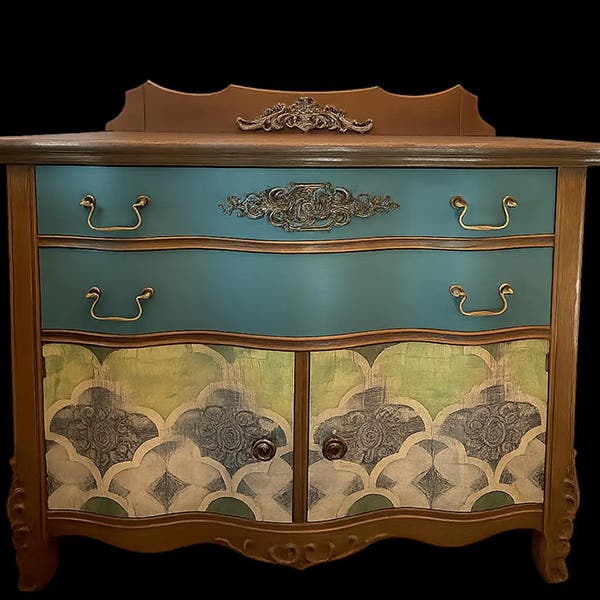
Additionally, many pieces of Federal-period furniture were made in Delaware or commissioned by wealthy families living there. Local cabinetmakers produced refined tables, chests, and cupboard pieces that reflected the neoclassical style popular in the late 18th and early 19th centuries, and surviving examples remain prized by collectors of early American furniture.
Looking Ahead: America 250 Delaware Calendar Highlights
Throughout 2026 — Statewide America250 Programming
Educational programs, exhibitions, and community events marking the nation’s 250th anniversary.
March 28, 2026 – New Sweden Day
Commemorating the arrival of Swedish and Finnish colonists in 1638
Spring–Fall 2026 – Events at Greenbank Mills & Philips Farm
The living history museum will have a series of events on life and industry in Revolutionary War – era Delaware, including “Milling in the Revolution: Waterwheels and Water Power” (April 11), “Building America: Blacksmithing” (May 23), and “Feeding in the Revolution: Baking During the Revolution” (September 26)
June 12, 2026 – Separation Day 2026
Celebrating Delaware’s independence from Pennsylvania
July 3, 2026 — Two Lights for Tomorrow
Participation in the national commemorative moment.
July 4, 2026 — America’s 250th Birthday Celebrations
Civic ceremonies and local gatherings statewide.
July 8, 2026 — Simultaneous Reading of the Declaration of Independence
Public readings across Connecticut communities.
You may also like: