

America at 250: Georgia’s Craft, Commerce, and Cultural Influence
As the United States approaches its 250th anniversary, Georgia highlights a history shaped by tradition, industry, and a cultural legacy that connects craftsmanship with commerce.
Each Friday, we celebrate America’s 250th by exploring one state or territory at a time, uncovering the history, crafts, and Semiquincentennial events that help tell the nation’s story.
A Brief History of the Peach State
Georgia’s history begins with its Indigenous people. From the earliest inhabitants of the Paleo era to the generations that thrived long before the first European settlers arrived. The First Peoples' nations include the Cherokee and Muscogee, whose communities were deeply connected to the land and its resources. Established as a British colony in 1733 under James Oglethorpe, Georgia served as a strategic buffer between Spanish Florida and the English colonies to the north. Its early development was shaped by agriculture, trade, and, later, plantation economies tied to enslaved labor.
Georgia became the fourth state to ratify the U.S. Constitution in 1788. During the Civil War, it played a significant role in the Confederacy, with General William Tecumseh Sherman’s 1864 March to the Sea leaving a lasting mark on the state’s landscape and infrastructure. In the 20th century, Georgia emerged as a center of economic growth and social change, particularly during the Civil Rights Movement, while Atlanta grew into a major cultural and commercial hub.
Today, Georgia continues to balance its deep historical roots with modern innovation, making it a fitting participant in the nation’s Semiquincentennial observance.
Honoring the 250th: Georgia’s Role in America’s Celebration
Georgia is marking America’s Semiquincentennial through a coordinated effort led by the Georgia US250 Commission, which encourages communities across the state to participate in civic, cultural, and educational programming tied to the nation’s founding. As one of the original 13 colonies, Georgia’s observance places particular emphasis on Revolutionary-era history while also inviting modern audiences to engage with the state’s evolving story.
Material culture plays a meaningful role in Georgia’s programming. The Georgia Historical Society is leading initiatives such as Georgia at the US250, an exhibition and publication that interprets the state’s history through objects and documents drawn from its collections. These efforts highlight how physical artifacts, from everyday items to significant historical pieces, help tell the broader story of Georgia’s past.
Statewide programming extends into communities through exhibitions and educational initiatives. The Georgia Humanities Council is hosting Museum on Main Street: Voices and Votes, a Smithsonian traveling exhibition exploring American democracy, which will tour multiple Georgia communities from 2026 into 2027. Libraries and local institutions are also participating with lectures, discussions, and public programming that examine the nation’s history and its ongoing impact.
At the local level, cities such as Savannah and Roswell are developing their own commemorations, including citywide event calendars, cultural programs, and performances tied to the anniversary. Highlights include community celebrations, historical site programming, and performances like the May 3, 2026, America250 concert at the Roswell Cultural Arts Center, reflecting a blend of education and entertainment designed to engage a broad audience.
Across the state, Georgia’s America250 initiatives emphasize participation as much as preservation, encouraging communities to host public readings of the Declaration of Independence, incorporate Revolutionary themes into existing events, and create new programs that connect local history to the national story. Additionally, Museums, historic sites, and cultural institutions across the state are incorporating material culture into their programming, encouraging residents and visitors alike to explore the objects that define Georgia’s past. From preserved historic homes to regional craft traditions, these efforts reinforce the idea that history is not only recorded in documents but also in the physical items that have endured across generations.
Within that material culture, Georgia’s collectibles reflect a blend of Southern craftsmanship, agricultural history, and nationally recognized branding.
Georgia’s Craft and Collecting Traditions
Georgia’s collectibles heritage reflects a blend of Southern craftsmanship, agricultural history, and nationally recognized branding. For many collectors, the state is best known as the birthplace of The Coca-Cola Company, founded in Atlanta in 1886. The company produced a wide range of advertising and packaging materials, including tin signs, glass bottles, wooden crates, and promotional calendars. Today, Coca-Cola memorabilia remains one of the most widely collected categories of American advertising, with strong ties to the state’s identity. Coca-Cola collectors should be sure to take in the Cedartown Museum of Coca-Cola Memorabilia.
Georgia’s “Peach State” nickname, rooted in its long history of producing exceptionally high-quality fruit, remains a legacy reflected in a wide range of collectible ephemera. Vintage crate labels, like those used by growers and distributors in the early 20th century, combined bold graphics with regional branding to promote Georgia’s prized fruit. Today, these colorful labels, along with advertising signs, packaging, and agricultural memorabilia, are highly sought after by collectors for their vibrant design and connection to the state’s farming heritage.
Beyond advertising, Georgia’s material culture is rooted in everyday life. Southern furniture, including pine pie safes and other handmade case pieces, reflects practical design shaped by climate and necessity. Quilts and textiles, often made from available fabrics and stitched by hand, offer insight into domestic life and regional traditions. Georgia Celebrates Quilts, the state’s largest continuing juried and judged quilt show, highlights a craft passed down through generations, with more than 300 works by artists from across Georgia featured during its June biennial event alongside America’s 250th anniversary.
The state’s history is also preserved through Civil War and agricultural artifacts, including military relics, cotton scales, and farm tools that speak to Georgia’s role in both conflict and cultivation.
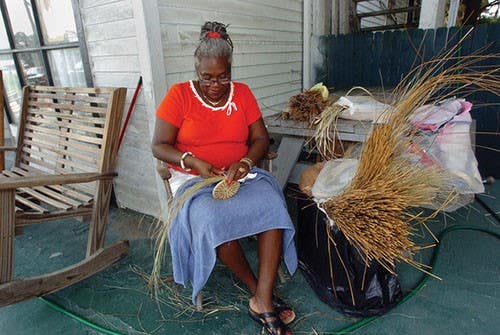
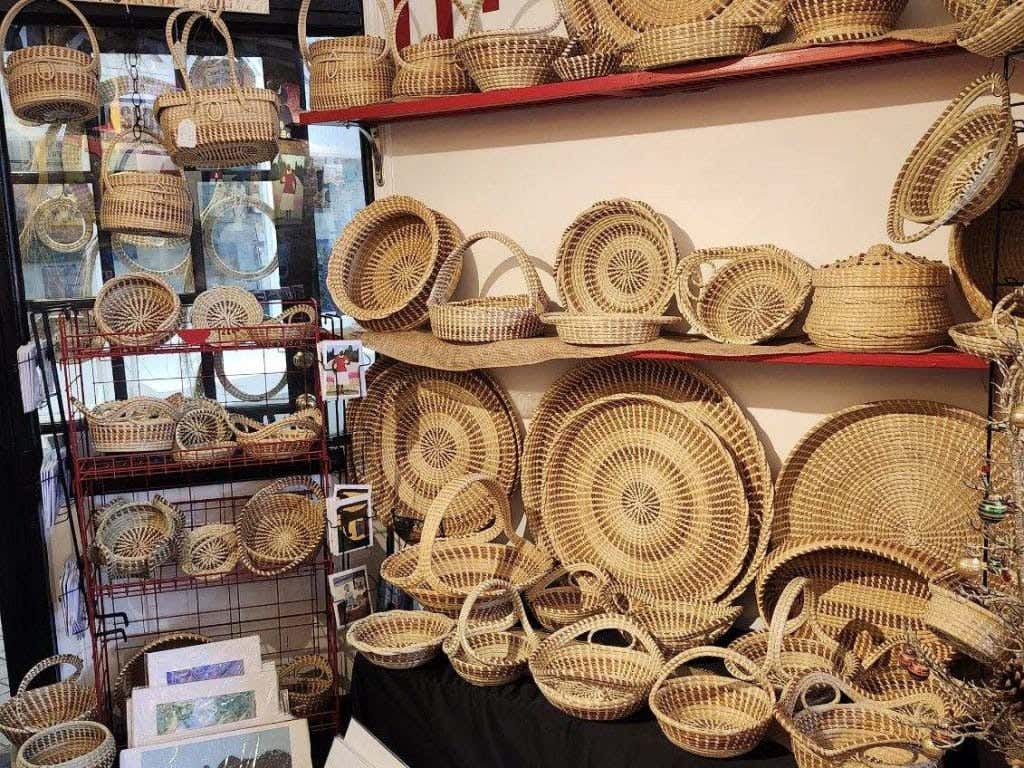
Indigenous and coastal craft traditions remain an important part of Georgia’s cultural landscape. Along the coast, Gullah Geechee artisans continue the centuries-old practice of sweetgrass basket weaving, with makers such as Savannah-based weaver Jery Taylor carrying forward techniques passed down through generations. In North Georgia, Cherokee basketry traditions, particularly rivercane weaving, reflect a deep connection to the land and its natural materials, preserving techniques passed down despite the displacement of Native communities in the 19th century. Collectors can support these living traditions by purchasing directly from contemporary artisans, while older works should be approached with care, ensuring proper provenance and ethical sourcing.
Georgia also holds a place in American pop culture as the home of the Cabbage Patch Kids, a collectible phenomenon that adds a playful note to the state’s history. Collectors can even make a pilgrimage to BabyLand General Hospital in Cleveland, Georgia, where Cabbage Patch Kids are “born,” and the brand’s legacy continues to delight visitors.
Looking Ahead: America250 Georgia Calendar Highlights
Throughout 2026 – America250 Georgia Statewide Programming. Educational initiatives, exhibitions, and community events marking the nation’s 250th anniversary across Georgia
February–July 2026 — Voices and Votes: Democracy in America (Georgia Tour)
A Smithsonian traveling exhibition hosted at multiple Georgia venues through the Georgia Humanities, exploring the history of American democracy through artifacts, images, and interactive displays.
March 2026 — Georgia Historical Society America 250 Programming Begins
The Georgia Historical Society launches its Semiquincentennial initiatives, including exhibitions, lectures, and educational outreach tied to Georgia’s role in the nation’s founding.
May 3, 2026 — America250 Concert, Roswell Cultural Arts Center
A community-centered performance in Roswell celebrating the nation’s 250th through music and storytelling, reflecting both historical themes and modern cultural expression.
July 3, 2026 — Two Lights for Tomorrow
A nationwide commemorative moment observed in Georgia communities as part of the Semiquincentennial.
July 4, 2026 — Statewide America 250 Celebrations
Communities across Georgia will mark Independence Day with enhanced programming, including public readings of the Declaration of Independence, historical reenactments, and local Semiquincentennial festivals.
July 8, 2026 — Simultaneous Reading of the Declaration of Independence
A coordinated national observance bringing communities together through shared civic reflection.
June–September 2026 — Our American Story (National Exhibition Series)
A nationwide initiative supported by the Smithsonian Institution, featuring exhibitions and digital programming that explore the people, events, and objects that shaped the United States.
You may also like:
Collect.com. Connecting collectors to what matters. Search our collector’s database for services, events, resources, and articles about the collectibles you love.