

America at 250: Indiana, the Crossroads of America
As the United States approaches its 250th anniversary, Indiana highlights a history shaped by frontier roots, industrial growth, and a cultural legacy that connects innovation with tradition.
Each Friday, we celebrate America’s 250th by exploring one state or territory at a time, uncovering the history, crafts, and Semiquincentennial events that help tell the nation’s story.
A Brief History of the Hoosier State
Long before Indiana became known as the “Crossroads of America,” the region was home to Indigenous peoples whose cultures shaped the land for thousands of years. Paleo-Indians lived in the area as early as 8000 B.C. Later groups, including the Adena, Hopewell, and Mississippian cultures, constructed earthworks, such as mounds, and developed extensive trade networks. By the time Europeans arrived, Native nations such as the Miami, Shawnee, Potawatomi, and Delaware inhabited the region.
Beginning in the late 18th century and accelerating after the passage of the Indian Removal Act in 1830, Native nations in Indiana faced increasing pressure through treaties, land cessions, and forced displacement. Tribes, including the Miami, Potawatomi, and Delaware, were gradually removed from their ancestral homelands, most often under coercive circumstances, as American expansion reshaped the region. These removals profoundly altered Indiana’s cultural landscape, though Indigenous communities and their traditions remain an enduring part of the state’s history.
French explorers first entered Indiana in the late 17th century, establishing trade relationships and forts as part of New France. Control later shifted to Britain following the French and Indian War, then to the United States after the American Revolution. The Indiana Territory was created in 1800, with William Henry Harrison serving as governor. Conflict between settlers and Native peoples culminated in events such as the Battle of Tippecanoe in 1811, a significant precursor to the War of 1812.
Indiana became the 19th state on December 11, 1816. Its location quickly made it a vital transportation corridor. Canals, railroads, and later highways helped earn it the nickname “Crossroads of America.” Agriculture and manufacturing drove much of the state’s growth throughout the 19th and 20th centuries. Cities such as Indianapolis, Fort Wayne, and South Bend became important centers of commerce and innovation.
Indiana also played a notable role in national cultural and industrial development. The state became closely associated with automotive history through the Indianapolis Motor Speedway and the Indianapolis 500. Companies like Studebaker in South Bend helped define early American transportation. From frontier settlement to industrial powerhouse, Indiana’s history reflects both regional resilience and national influence.
The exact origin of “Hoosier” remains uncertain, but the nickname was widely used for Indiana residents by the 1830s. Popular theories connect it to frontier workers, river laborers, or Methodist preacher Harry Hoosier, though no single explanation has been definitively proven. Over time, the term evolved into a proud symbol of Indiana identity.
As the United States prepares to celebrate 250 years of independence, Indiana is focusing on its rich heritage as a place where transportation, industry, and community have long intersected, connecting its frontier past to its modern identity.
Honoring the 250th: Indiana’s Role in America’s Celebration
Indiana is observing America’s Semiquincentennial through statewide initiatives, local programming, and educational outreach coordinated by the Indiana Semiquincentennial Commission. Historical societies, museums, cultural organizations, and community groups across the state are working together to highlight Indiana’s contributions to the broader American story, from its Indigenous heritage and frontier settlement to its role in transportation, manufacturing, and innovation.
Material culture plays an important role in Indiana’s celebrations. Museums, historic sites, and community festivals are incorporating exhibitions, demonstrations, and educational programs that showcase the objects and traditions that define Indiana’s past, from pioneer craftsmanship and agricultural heritage to industrial innovation and automotive history.
Indiana’s identity as the “Crossroads of America” is central to many of these efforts. Transportation history, including canals, railroads, highways, and automotive achievements such as the Indianapolis Motor Speedway, provides a distinctive lens through which the state interprets its role in national development.
Across Indiana, communities are marking the anniversary through festivals, heritage events, public art, and educational initiatives that reflect the state’s diverse cultural influences. These efforts emphasize not only preservation, but participation, encouraging residents and visitors alike to explore the people, places, and objects that continue to shape Indiana’s legacy.
Indiana’s Industrial and Cultural Heritage
Indiana’s strong manufacturing legacy and regional craftsmanship have created a rich landscape for collectors. The state’s industrial history is reflected in everything from transportation and automotive memorabilia to pressed steel toys, glassware, and decorative arts, while its agricultural roots and small-town traditions remain visible in handmade furniture, textiles, and folk crafts.
Indiana is perhaps best known in collector circles for its transportation heritage. South Bend’s Studebaker legacy remains a major draw for automotive enthusiasts, while Indianapolis’ deep ties to racing culture, particularly the Indianapolis Motor Speedway and Indianapolis 500, have made automotive memorabilia a significant collecting category. Signs, promotional materials, model cars, and racing souvenirs all reflect Indiana’s role in shaping American transportation history.
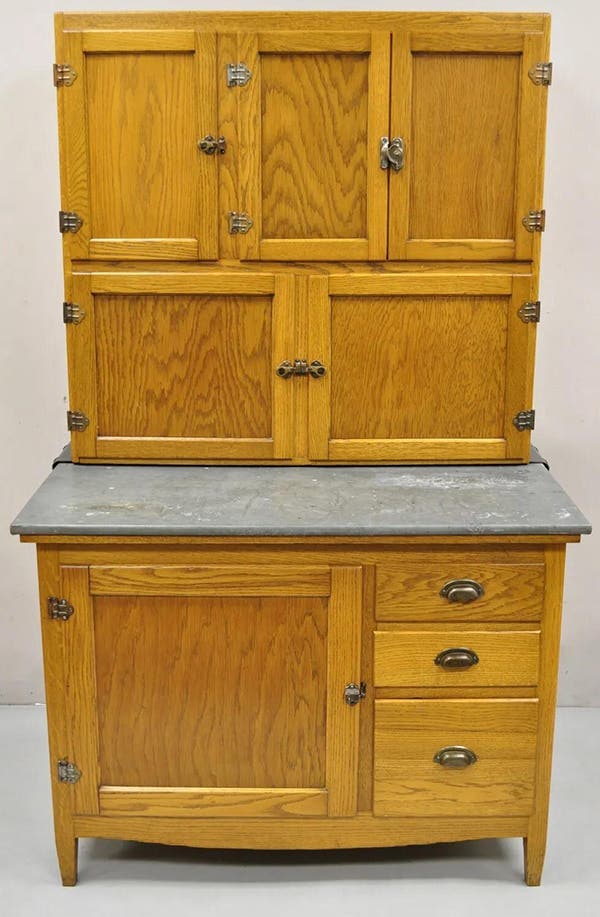
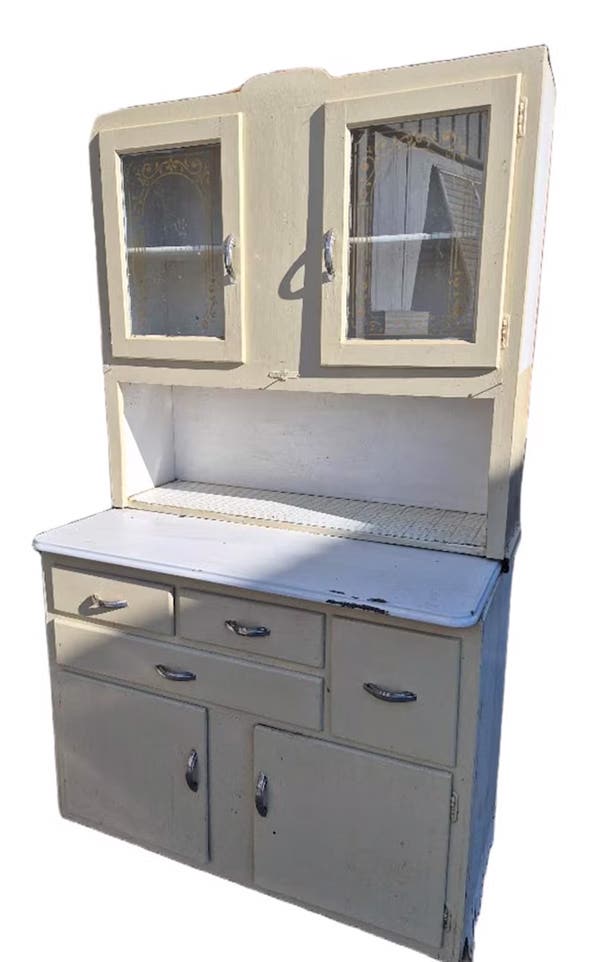
Beyond industry, Indiana has a notable tradition in decorative arts. Hoosier cabinets, prized for their practicality and design, remain one of the state’s most recognizable contributions to American furniture history. Indiana glass manufacturers, including companies producing pressed and decorative glass, also contribute to the state’s broad material culture.
Indiana’s cultural legacy is deeply tied to craftsmanship, particularly through the iconic Hoosier cabinet, one of the state’s most recognizable contributions to American domestic design. Originating in Indiana in the late 19th and early 20th centuries, these freestanding kitchen cabinets were produced by companies such as the Hoosier Manufacturing Company of New Castle and became prized for their efficiency, built-in storage, and innovative workspace features before modern fitted kitchens became common. Available in a variety of styles, from simple utilitarian models to more decorative versions with flour sifters, enamel work surfaces, spice racks, and specialized compartments, Hoosier cabinets remain highly sought after by collectors today. Alongside the state’s historic architecture, Arts & Crafts influences, and longstanding woodworking traditions, they reflect Indiana’s ability to blend industrial innovation with everyday practicality.
Indiana’s agricultural heritage includes one of its most distinctive architectural traditions: the round barn. Once home to more round barns than any other state, Indiana earned the title of the “Round Barn Capital of the World,” with these unusual structures symbolizing early 20th-century innovation in farm design. Built for efficiency and visual appeal, round barns remain prized today as rare examples of rural craftsmanship, preserving an important part of the Hoosier State’s farming and architectural legacy.
Collectors exploring Indiana’s heritage will find a state whose history is preserved not only in its landmarks and institutions, but also in the objects that reflect its role as both an industrial powerhouse and a center of American craftsmanship.
Looking Ahead: America250 Indiana Calendar Highlights
Throughout 2026 – America250 Indiana Statewide Programming: Educational initiatives, exhibitions, and community events marking the nation’s 250th anniversary across Illinois.
Throughout 2026 – America250 Directory of Indiana County Events: Events are laid out by county and date, with clickable event page information.
July 3, 2026 — Two Lights for Tomorrow: A nationwide commemorative moment observed in Indiana communities as part of the Semiquincentennial.
July 4, 2026—Statewide America250 Celebrations: Communities across Indiana will mark Independence Day with enhanced programming, including public readings of the Declaration of Independence, historical reenactments, and local Semiquincentennial festivals.
July 4, 2026—Fourth of July Celebration: 250th anniversary celebration on July 4, 2026, at the Indiana War Memorial in Indianapolis.
July 8, 2026 — Simultaneous Reading of the Declaration of Independence: A coordinated national observance bringing communities together through shared civic reflection.
July 30-Aug 2, 2026: Dubois County Jasper Strassen Fest: 4-day German-themed festival embracing America's 250th birthday.
Most of Indiana’s events are listed specifically to the host county. Visit the website, https://www.in.gov/usa250/, for more information.
You may also like:
Collect.com. Connecting collectors to what matters. Search our collector’s database for services, events, resources, and articles about the collectibles you love.